




Australian Media Giants Launch Campaign Against AI Copyright Threat
Australia’s media and music industries are urging the federal government to strengthen copyright protections against artificial intelligence companies.
Some of the country’s biggest media organisations have joined forces to launch a national campaign called Not AI’s to Take. Organisers unveiled the initiative at the ARIA Awards in Sydney.
The campaign targets generative AI companies that use online material to train their systems. These systems scan content such as music, books, artwork and journalism. However, creators and media organisations argue that technology companies should not use their work without permission or payment.
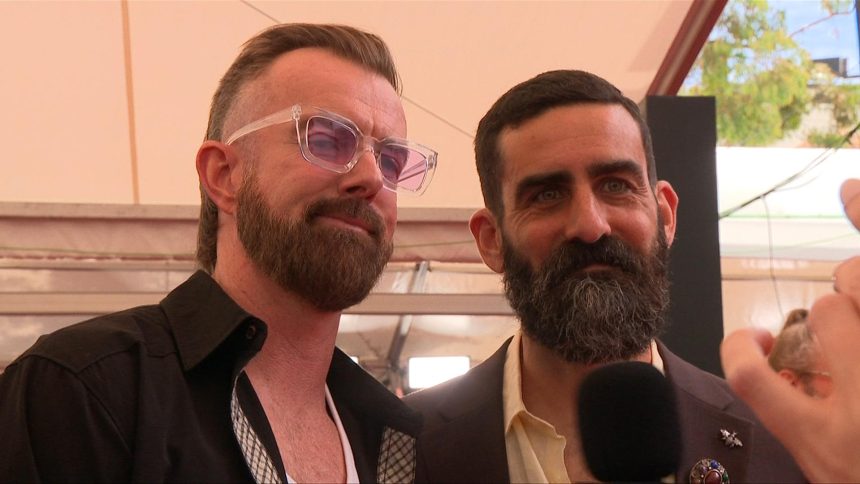
Several artists attending the awards expressed frustration with the rapid growth of AI technology. Singer Ben Lee told 7NEWS that AI companies should follow the same copyright rules as everyone else.
“They should be subject to the exact same copyright laws that you or I are subject to. You can’t just use other people’s ideas and stuff without paying them,” Lee said.
Not AI’s to Take campaign calls for stronger copyright laws
The campaign has launched an online video and petition to encourage public support. Its central message is straightforward: technology companies should seek permission and pay creators when they use other people’s work.
ARIA chief executive Annabelle Herd also urged the federal government to protect Australian creators and media businesses.
“I guess my message to the Australian government is don’t sell out Australian creators,” Herd said.
She added that the government should also protect creators and media companies around the world.
Meanwhile, Ocean Alley guitarist Mitch Galbraith said Australian musicians deserved respect from policymakers. He pointed to the contribution of Australian music to the country’s culture and society.
Galbraith also criticised proposed legal changes that he believes could favour AI companies over local artists. Longtime Wiggles member John Pearce shared similar concerns.
Pearce said musicians invest significant effort in creating music. He argued that AI-generated songs could undermine the work of people who develop their musical skills and produce original material.
AI training databases raise concerns among Australian artists
Concerns about the use of copyrighted music for AI training have also attracted international attention.
In June 2026, an investigation by The Atlantic reportedly found that overseas databases had collected millions of songs from the internet. The material included recordings by Australian artists Kylie Minogue and Jimmy Barnes.
At the ARIA Awards, artist bbyclose also claimed that AI systems had already used her content.
“I know that AI has already taken my content actually,” she said.
These concerns have helped bring major media and entertainment organisations together. Seven Media Group, Nine, Foxtel and The Guardian have joined the campaign. Organisations representing Australia’s music, film and publishing industries have also backed the initiative.
Media and entertainment groups seek protection for 600,000 workers
The campaign’s supporters say their combined industries represent around 600,000 workers and contribute $70 billion to the Australian economy.
They want the federal government to introduce laws that protect original content. They also oppose changes that could weaken existing copyright safeguards.
FreeTV chief executive Bridget Fair said Australian news organisations should receive payment when AI companies use their journalism.
“Australian newsrooms don’t work for free, and AI companies shouldn’t get to just help themselves to their journalism,” Fair said.
However, global technology companies have also raised concerns about potential restrictions. According to the campaign’s reporting, some major AI companies have threatened to withhold hundreds of billions of dollars in investment from Australia if the country does not change its laws to suit their business models.
Federal government considers new AI legislation
The Albanese government is developing a broader package of artificial intelligence policies. Draft legislation could emerge late this year or early next year.
In a statement, a spokesperson for Attorney-General Michelle Rowland said the government remained committed to supporting Australia’s creative industries.
The spokesperson said the government was consulting creators, media organisations and AI companies. Those discussions are examining possible changes to copyright rules, including ways to give creators greater control and ensure fair compensation.
The debate highlights a growing challenge for policymakers. They must consider the interests of technology companies while addressing concerns from artists, publishers, journalists and other rights holders.
For now, the Not AI’s to Take campaign is asking Australians to support stronger protections. Its organisers argue that creators should have a say in how AI companies use their work and should receive payment when those companies benefit from it.

 English
 Dutch
 Arabic
 Chinese
 German
 Estonian
 Portuguese
 Spanish
 Japanese